
In accordance with the EU's implementation of the Personal Data Protection Act, we are committed to safeguarding your personal information and providing you control over it. We have updated and will regularly update our Privacy Policy to comply with this personal data protection law. Please refer to our latest Privacy Statement.
This website uses cookies to enhance your browsing experience. To learn more about how this website uses cookies, please click here.
Latest News
03.Dec.2025
Material Knowledge
Guidelines for Rust Prevention, Storage, and Handling
Our special steel sheets and coils are coated with a uniform protective anti-rust oil before shipment.
However, steel is sensitive to environmental conditions, and improper storage may lead to corrosion.
To maintain product quality over the long term, please follow the guidelines below.
1. Humidity Control - The Concept of "Critical Humidity"
There is a reference humidity level at which steel begins to corrode, known as critical humidity.
In general:
-
When the relative humidity exceeds approximately 70%, a thin moisture film can form on the steel surface, accelerating corrosion.
-
When the relative humidity is kept below 60%, the likelihood of rust formation is significantly reduced.
Therefore, steel should be stored in a low-humidity environment and kept away from:
-
Locations with large temperature fluctuations that may cause condensation
-
Poorly ventilated or confined spaces
-
Areas exposed to rain, moisture, or high humidity
If any packaging material is damaged, please repair it promptly to prevent moisture intrusion.
2. Influence of Harmful Substances in the Atmosphere
Even in low-humidity conditions, certain environmental components can accelerate corrosion:
-
Chlorides in coastal environments (sea-salt particles)
-
Acidic gases in industrial areas (e.g., hydrogen chloride, sulfur oxides)
-
Hygroscopic gases that may exist near chemical storage areas
These substances can attract moisture from the air. As a result, corrosion may occur even when the humidity is below the critical level.
More stringent anti-rust measures should be taken when storing steel in such environments.
3. Localized Corrosion Caused by Local Batteries (Local Battery Effect)
Dust or foreign matter adhering to the steel surface may create a “local battery,” causing accelerated localized corrosion.
About the Local Battery Effect
When different areas of the steel surface develop a potential difference, a tiny galvanic cell may form.
Metal ions in certain areas can dissolve more readily, resulting in electrochemical corrosion.
Common situations include:
-
Dust, metal particles, or contaminants on the surface
-
Tiny moisture-containing particles
-
Small surface scratches
These conditions can break the protective anti-rust oil film, causing localized corrosion to occur rapidly.
To minimize risk, keep the storage environment clean, use the material promptly after unpacking, and avoid surface contamination.
⚠️Anti-rust oil is not a permanent protection. After opening the packaging, please process and use the steel as soon as possible.
Other
03
Nov.2025
Material Knowledge
Hardness Conversion Table

10
Mar.2026
Material Knowledge
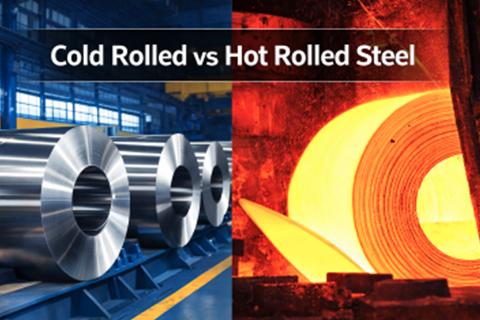
Cold Rolled vs Hot Rolled Steel: A Practical Guide for Engineers and Buyers